Concrete Leveling in Derby, KS - Polyurethane Slab Lifting and Mudjacking
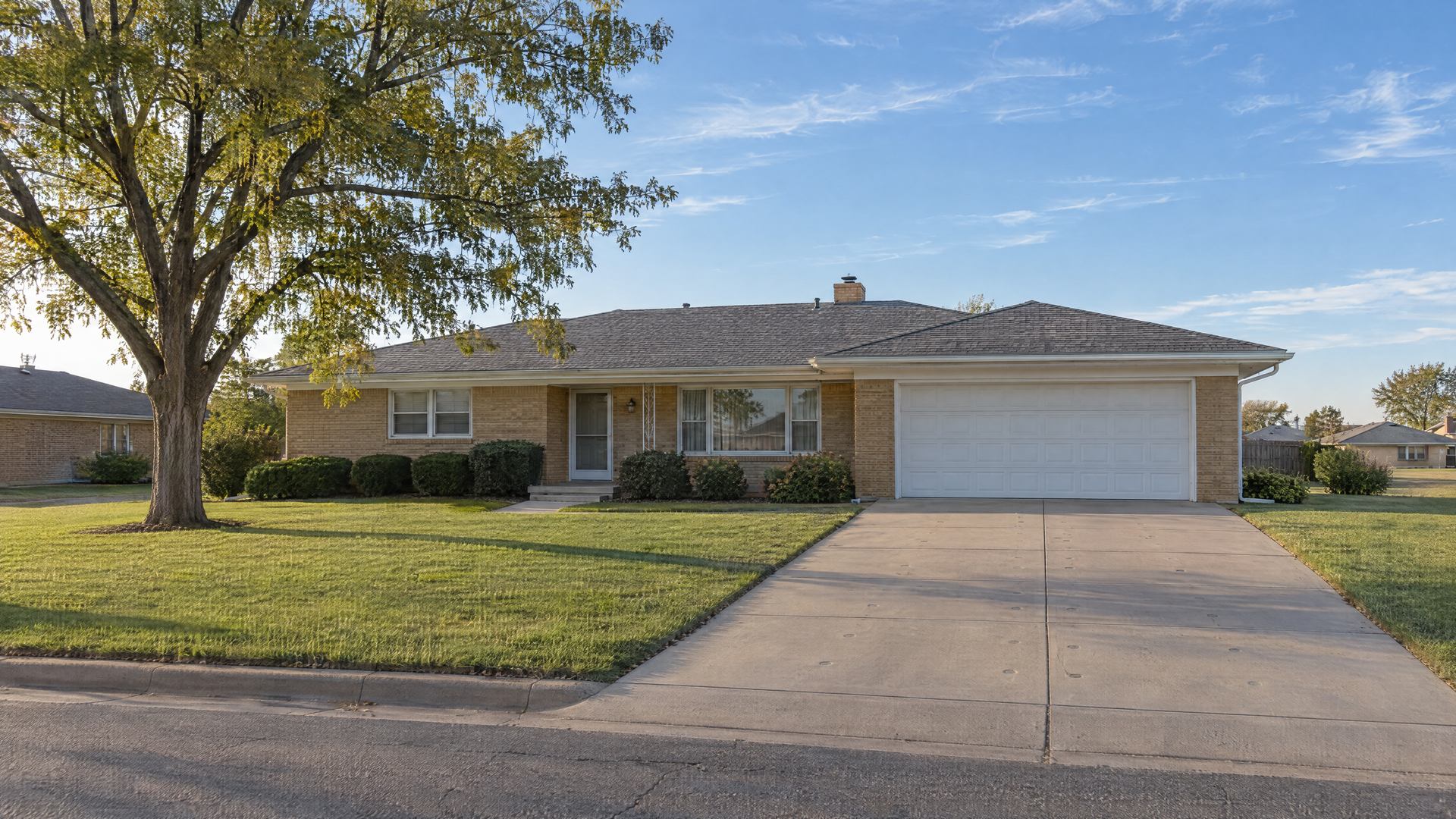
Derby sits on the southeast shoulder of the Wichita metro, close enough that the run up K-15 is a short one and separate enough that a Derby driveway is its own problem. The city has gone from 22,158 residents in 2010 to 25,625 in 2020 to 26,606 in the Census Bureau's July 2025 estimate, and almost all of that arrived as subdivision fill on ground that was cropland a generation ago. Census QuickFacts puts owner occupancy here at 68.5 percent against a median home value of $236,900. When the apron drops below the garage slab, the owner eats it, and lifting the panel is what we line up.
The rule that shapes concrete work in Derby is a county-wide one. Wichita and Sedgwick County adopted a single Unified Building and Trade Code built on the 2018 International Residential Code, effective January 1, 2019, and its amended Table R301.2(1) fixes the frost line depth at 24 inches, the ground snow load at 15 pounds per square foot, weathering as Severe and the seismic design category at A. Section 2.4.420 requires every exterior footing to sit at least 24 inches below undisturbed ground. Footings go deep here by law. Flatwork does not - a four-inch driveway slab floats on whatever the grader left behind, which is why the drive moves while the house stays put.
Free quote
Derby's Newest Streets Have Its Worst Concrete
The oldest blocks in town trace to a settlement the Alexander Garrett family started near Spring Creek in the spring of 1869. The place was platted as El Paso in July 1871 by Hart Minnich and John Hufbauer, and it did not become Derby on paper until 1956 - three-quarters of a century after the Atchison, Topeka and Santa Fe renamed the station to stop confusing freight with El Paso, Texas. Those original blocks incorporated on June 1, 1903 with roughly 300 residents. The concrete on them has had a very long time to find its level, and the ground under it finished settling before anybody now living owned it. What moves in Derby today is newer: the ring of subdivisions that carried the city from 22,158 people to 26,606 inside fifteen years, poured on engineered fill that got a couple of seasons to consolidate before a truck backed onto it.
That fill is why a five-year-old Derby driveway can be in worse shape than a fifty-year-old one, and the soil underneath does not help. Hydrologic soil group reports prepared by USDA NRCS and filed with the City of Wichita rate Tabler silty clay loam on 0 to 1 percent slopes, Goessel silty clay on 1 to 3 percent slopes, Rosehill silty clay on 1 to 3 percent slopes and Carwile fine sandy loam all as Group D. NRCS defines Group D as high runoff potential when thoroughly wet, with water movement through the soil restricted or very restricted, and the county reports state outright that Group D soils consist chiefly of clays with a high shrink-swell potential. Water does not go down through that. It runs across the top of it, finds the low edge of a slab and carries the bedding away. Filling the void and lifting the panel costs less than replacing the panel and leaving the void.
See Derby, KS on Google Maps — we cover the whole area from Wichita.
Concrete leveling & mudjacking Services Available in Derby
Every service we offer in Wichita is available to Derby homeowners and businesses at the same pricing:
See the full pricing guide for typical ranges.
Derby FAQs
Does Wichita's building code reach Derby, or does Derby have its own?
Derby is inside Sedgwick County, so the Wichita-Sedgwick County Unified Building and Trade Code covers it. That code adopted the 2018 International Residential Code and the 2015 Uniform Plumbing Code effective January 1, 2019, with local amendments to Table R301.2(1) that set the frost line depth at 24 inches, the ground snow load at 15 pounds per square foot and the winter design temperature at -7 degrees. Permitting is still a city matter, so call Derby before any pour. A foam lift removes no concrete and pours no footing, which makes the scope far narrower than a replacement.
The sidewalk panel in front of my Derby house has tipped. Whose repair is that?
Kansas is blunt about this. K.S.A. 12-1808 states that it is the duty of the owner of the abutting property to keep the sidewalk in repair, and that duty runs to the city rather than to the pedestrian. The statute also lets a city engineer or city clerk, after five days' notice to the owner, make the repairs and levy a special assessment against the abutting property; if the assessment goes unpaid for 30 days after notice, it can be certified to the county clerk and collected with the taxes. Lifting the panel is usually the cheaper way to end that clock.
How is a Derby slab different from one in Wichita proper?
Mostly age and ownership. Census QuickFacts puts Wichita at 400,987 residents with 58.9 percent owner occupancy and a median home value of $190,800; Derby is 26,606 residents with 68.5 percent owner occupancy and a median value of $236,900. That translates into newer houses, attached garages and wider aprons poured on newer fill. Wichita's core has flatwork that stopped moving decades ago and cracks from plain age. Derby's problem panels are usually intact and simply out of level, which is the condition foam injection is built for.
Get Your Free Derby Quote
Free quote